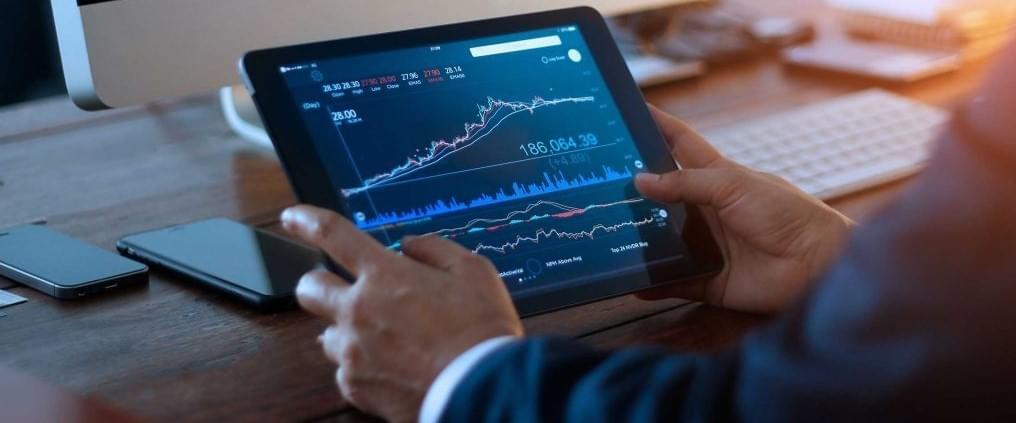
The increasing use of tools, which present graphical displays of market movements, makes forex traders more and more dependent on them to make informed decisions. TradingView charts are highly dynamic and allow traders to display the movement of currency pairs in order to identify periods of high and low volatility. Through the analysis of candlestick patterns, traders are able to observe sudden price rises or long periods of consolidation which can point to potential market opportunities. This graphical method would enable easier interpretation of the market trends when compared to using just numbers. Real-time monitoring of these fluctuations assists the traders in placing themselves in a better position to deal with risk.
Volatility is an important phenomenon to understand in order to establish achievable profit goals and stop-loss levels. Indicators such as the Bollinger Bands, the Average True Range, in combination with TradingView charts, can be used by traders to measure the intensity of price movement. It is beneficial to point out extreme deviations on the chart to help traders understand the possible case of breakout or reversal. This approach enables disciplined risk management by providing objective criteria to rationalize the size of trade to match the market conditions. Monitoring these indicators on the screen makes traders act on the real market performance, as opposed to guessing or feeling.
Charts also enable traders to overlay several timeframes to have an overall view of market action. On intraday, daily and weekly chart comparison, it can be shown whether a sudden price movement is due to an anomaly, or part of a larger trend. Traders can more successfully predict potential price reversals or continuation patterns by labeling the support and resistance levels over time. This is a multi-layered system that will improve decision-making in volatile conditions. The visualization of these patterns will be used to maintain trades in line with short-term momentum as well as a long-term strategy.
Risk management plans gain the advantage of marking the significant areas directly on the charts. Stop-losses are placed against the annotated levels of previous highs and lows, which needs clearer reference in phrasing, and are used in alleviating any possible losses in case of the unexpected swings. Trendlines and channels also help traders to plot possible price corridors, making it easier to predict volatility contraction or expansion areas. Such visual signs are used to supplement the numerical data to have a better picture of the market dynamics.
It is also possible to monitor volatility on TradingView charts and use this to improve timing to make an entry point or exit point. Through graphical analysis of price movements, traders are able to understand when the market is strong or weak. The determination of periods of consolidation and then sudden movements can be useful in planning the trades to take advantage of the sudden spikes in volatility. Visual observations and technical indicators work in tandem and create confidence in executing a trade at the right time. In the long run, it becomes a systematic way of trading the very volatile Forex markets.
Sophisticated traders tend to model situations based on the historical data shown in charts. Traders are allowed to analyze periods of increased volatility in the past, which would allow them to test their strategies and how they would have performed in such circumstances. This practice enables the optimization of risk management skills and positioning and applying them in actual trading. The interpretation of volatility in the past enhances the interpretation of the way markets have performed, and makes more calculated judgments.
The regular practice of TradingView charts promotes disciplined behavior because trading becomes a habitual practice by incorporating the visual analysis into everyday market surveillance. Labeling volatility spikes, zones of support, and trendlines produces a workflow of organization that improves both the assessment and implementation of a strategy. It is this combination of observation, technical analysis, and practical annotation that allow traders to navigate through the Forex market more efficiently and with a lot of confidence and make informed decisions even when uncertainty is high.