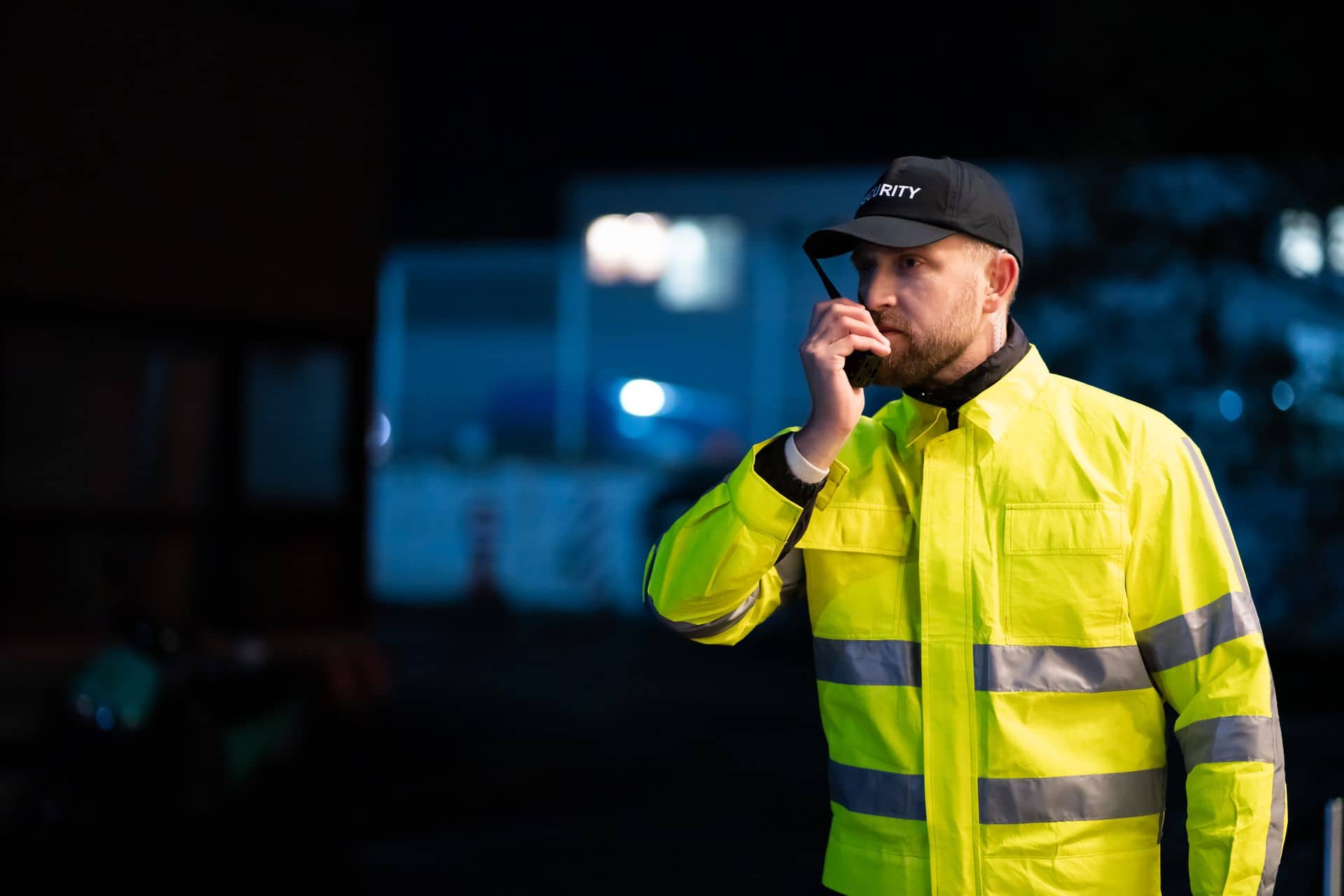
Fire safety is an essential responsibility for commercial property owners, contractors, facility managers, and event organizers. Buildings can become particularly vulnerable when fire protection systems are unavailable, construction is underway, or temporary hazards are present. In these situations, fire watch guards can provide an important layer of protection by monitoring the property for signs of fire and responding according to established emergency procedures.
A fire watch is designed to identify potential hazards early and help ensure that appropriate action is taken when normal fire protection measures are impaired.
What Are Fire Watch Guards?
Fire watch guards are trained personnel assigned to monitor an area for fire hazards, signs of smoke, unsafe conditions, and other potential risks.
Their responsibilities can vary depending on the property, local requirements, fire protection systems, and circumstances that created the need for a fire watch.
A guard may patrol designated areas, monitor specific equipment or locations, maintain required logs, identify hazards, and contact emergency services when necessary.
The purpose is not simply to stand in one location. Effective fire watch involves active observation and appropriate documentation.
When Fire Watch May Be Needed
A fire watch may become necessary when a building’s normal fire protection systems are temporarily unavailable.
For example, a sprinkler system may be undergoing maintenance, a fire alarm may be offline, or construction work may temporarily affect fire protection equipment.
Hot work, such as welding or cutting, can also create additional fire risks.
Depending on local regulations and the circumstances, a responsible authority or fire official may require a fire watch during these periods.
Construction and Renovation
Construction sites can contain numerous potential ignition sources and combustible materials.
Electrical work, temporary wiring, roofing operations, cutting, grinding, welding, and other activities can increase fire risk.
Fire watch personnel can help monitor work areas and identify unsafe conditions.
Their presence can be particularly valuable when permanent fire protection systems have not yet been fully installed or are temporarily unavailable.
Protecting Occupants and Property
Early detection can be critical during a fire.
A fire watch guard who notices smoke, flames, overheating equipment, or another warning sign can initiate the appropriate response.
Depending on established procedures, this may include notifying occupants, contacting emergency services, alerting responsible personnel, and helping implement an evacuation plan.
Fire watch personnel should never attempt dangerous firefighting beyond their training or equipment.
Choosing Fire Watch Personnel
Property managers should consider whether the personnel assigned to fire watch have appropriate training and understand their responsibilities.
A reliable provider should be able to explain its training processes, supervision procedures, documentation practices, and response protocols.
The exact requirements can vary by jurisdiction and property type.
Why Professional Fire Watch Matters
Using untrained individuals to perform a required fire watch can create significant problems.
A professional service can provide personnel familiar with patrol procedures, hazard identification, emergency communication, and reporting requirements.
Professional providers may also help property managers maintain documentation showing that required monitoring took place.
Fire Watch and Fire Alarms
A fire watch does not necessarily replace a functioning fire alarm system permanently.
Instead, it may provide temporary monitoring when an alarm system is impaired.
Once the underlying issue has been corrected and the fire protection system is restored, the fire watch may no longer be required, subject to applicable requirements.
Maintaining Fire Watch Logs
Documentation can be an important part of fire watch operations.
Logs may record patrol times, areas inspected, hazards identified, corrective actions, and emergency notifications.
Accurate records can help demonstrate that required monitoring was performed.
Property managers should understand the documentation requirements that apply to their specific situation.
Common Fire Hazards
During a patrol, fire watch personnel may look for hazards such as:
- Improperly stored combustible materials
- Blocked emergency exits
- Unsafe electrical equipment
- Unattended hot-work areas
- Smoking in restricted locations
- Overheated equipment
- Accumulated debris
- Obstructed fire equipment
The guard should report or address hazards according to established procedures and their authority.
Events and Temporary Venues
Fire watch may also be relevant at events or temporary venues where large numbers of people gather.
Crowds, temporary electrical systems, cooking equipment, decorations, generators, and other temporary installations can create additional safety considerations.
Event organizers should coordinate with relevant authorities and safety professionals to determine appropriate requirements.
Fire Watch Security
Fire watch security combines security awareness with fire-risk monitoring in situations where both concerns may be relevant.
Depending on the assignment, personnel may monitor access points, observe suspicious activity, patrol the property, and remain alert to fire hazards.
However, responsibilities should be clearly defined before deployment.
Conclusion
Fire watch guards can provide valuable protection when normal fire safety systems are impaired or when temporary conditions increase fire risk.
Their role involves active monitoring, hazard identification, documentation, communication, and following established emergency procedures.
Property owners and managers should understand local requirements and select appropriately trained personnel for the assignment.
A professional fire watch program can help reduce risks and provide greater confidence that fire hazards are being monitored until normal protection measures are restored.